Application qualification
Define material identity, thickness, geometry, finish target, and batch behavior. A labeled coupon matrix helps compare edge, contrast, residue, and heat effect without changing several parameters at once.
Support is most useful when it connects material qualification, system setup, operator practice, extraction, optics care, and documented troubleshooting. The service path begins with observable process evidence rather than assumptions about a single component.
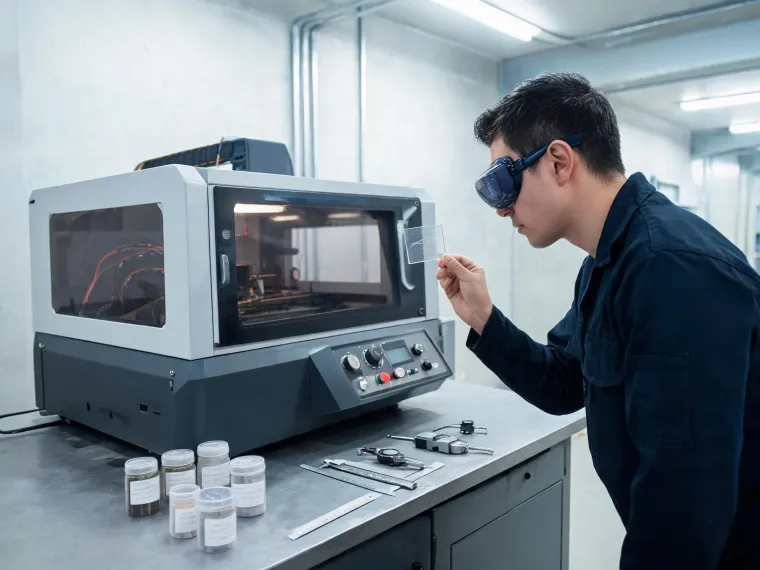
Define material identity, thickness, geometry, finish target, and batch behavior. A labeled coupon matrix helps compare edge, contrast, residue, and heat effect without changing several parameters at once.
Review space, access, electrical provision, extraction route, compressed-air needs where applicable, network connections, and material movement. Readiness checks reduce avoidable commissioning interruptions.
Connect software layers to machine actions, focus practice, origin selection, loading, observation, inspection, cleaning, and stop conditions. The handover record becomes the baseline for later diagnosis.
Inspect optics condition, airflow, filters, motion cleanliness, and recurring alarms on a defined schedule. Service intervals must reflect dust load and operating pattern; they are not universal numbers.
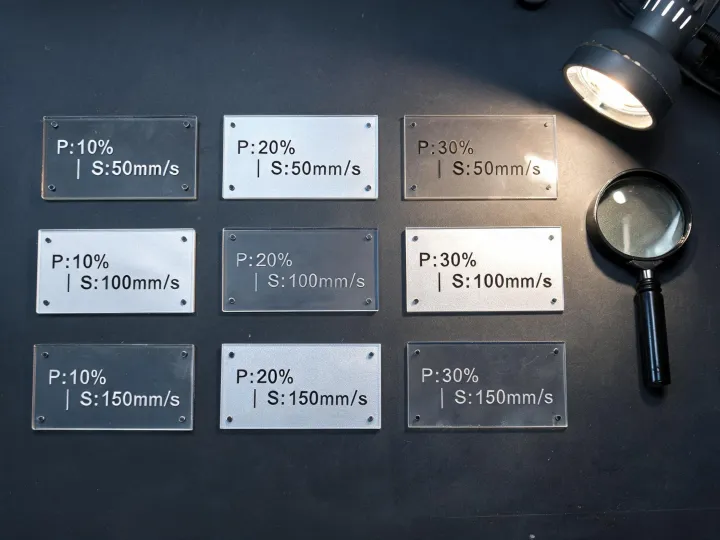
Background: a mixed job queue shows uneven engraving tone. Process: confirm stock identity, clean the optical path, hold artwork and focus constant, then repeat a compact parameter matrix on coupons from both material lots. Result: the team gains a traceable comparison between lot behavior and machine condition, without claiming that one adjustment fits every substrate.
The practical evidence is a labeled coupon, a settings record, and the inspection condition used to accept or reject it.
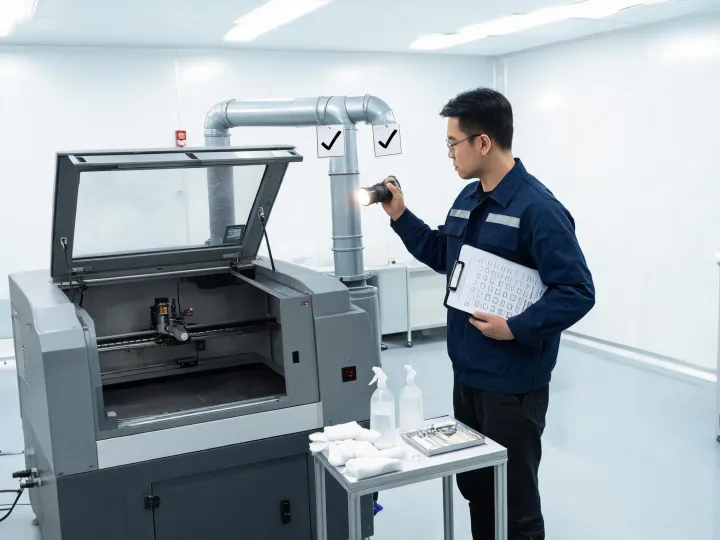
Background: edges show more deposit even though the saved job has not changed. Process: verify material lot, exhaust flow, air path, lens and mirror condition, focus routine, and bed cleanliness before altering power or speed. Result: corrective action is tied to a verified cause, and the accepted recipe remains meaningful.
PVC and other chlorine-bearing materials require special caution: laser processing can release corrosive and hazardous gases. Unknown polymer composition is a stop condition until the supplier documentation is reviewed.
A useful service brief includes what changed, what stayed constant, when the behavior began, the material specification, and photographs of the result. That evidence helps distinguish application, consumable, extraction, optics, motion, and software causes.